English With Confidence: High Expectations, Low Pressure
At Montessori Córdoba International School, English is part of daily life. Children hear it in lessons, stories, songs, routines, projects, presentations, and everyday conversations with adults. We use English purposefully and thoughtfully.
When families ask if children must speak English at all times, the answer is no. We do not require English at all times, and we never correct children in front of others for using Spanish or another language. For example, if a child asks a question in Spanish during a lesson, the guide listens, repeats the question in English for the group, and answers in English so everyone feels included. Later, the guide might invite the child to try saying it in English, if the child is ready, but always in a supportive way. We help children build confidence step by step.
This does not mean English is just an afterthought. We have spent time learning how children acquire an additional language—through classroom work, research, and writing for the Field Guide: Building Bilingual Elementary Programs. Our approach is based on evidence, not just tradition or an English-only rule. We focus on what really helps children become confident English speakers over time.
In summary, while we encourage and expect children to grow in English, we believe supportive guidance, not pressure, leads to real progress.
Understanding Comes First
When a child starts learning a new language, the first signs of progress are usually quiet and subtle. A child might follow a routine in English, understand a lesson, respond with a gesture, laugh at the right moment during a story, join in a repeated line of a song, or choose a material that was introduced in English.
For adults waiting to hear full sentences, it may seem like not much is happening. But a lot is going on beneath the surface. Children show progress in small ways, like following instructions in English, finishing tasks after an explanation, responding with actions or expressions, or understanding jokes. These signs show their understanding is growing, even before they start speaking.
Researchers such as Stephen Krashen have long noted that speaking typically develops after listening and understanding, even in very good learning conditions. He also describes a “silent period,” during which learners build comprehension before they are ready to produce the language themselves.
We see this pattern at school. Some children begin using English quickly, while others need more time to watch, listen, and take things in. This does not mean one child is learning and the other is not. It just means they are at different points in the process.
Why Pressure Can Close the Door
Speaking a new language can make children feel exposed. They have to use unfamiliar sounds, look for the right words, accept mistakes, and communicate with fewer tools than in their first language.
If every moment feels like a test, children become careful instead of fluent. Krashen’s “affective filter” idea explains that anxiety and low confidence can block language learning. He explains that forcing children to speak too soon is very stressful for them.
We do not use phrases like “Say it in English.” Sometimes a guide gently encourages a child to try an English word or phrase, but we pay close attention to the child’s feelings and readiness. We aim for high expectations while keeping children emotionally safe.
We want English to feel useful, familiar, and safe, so children are willing to take risks and try, even if they make mistakes.
English Is Still Expected
Not forcing English does not mean we leave it up to chance. Being relaxed does not mean we do not plan carefully.
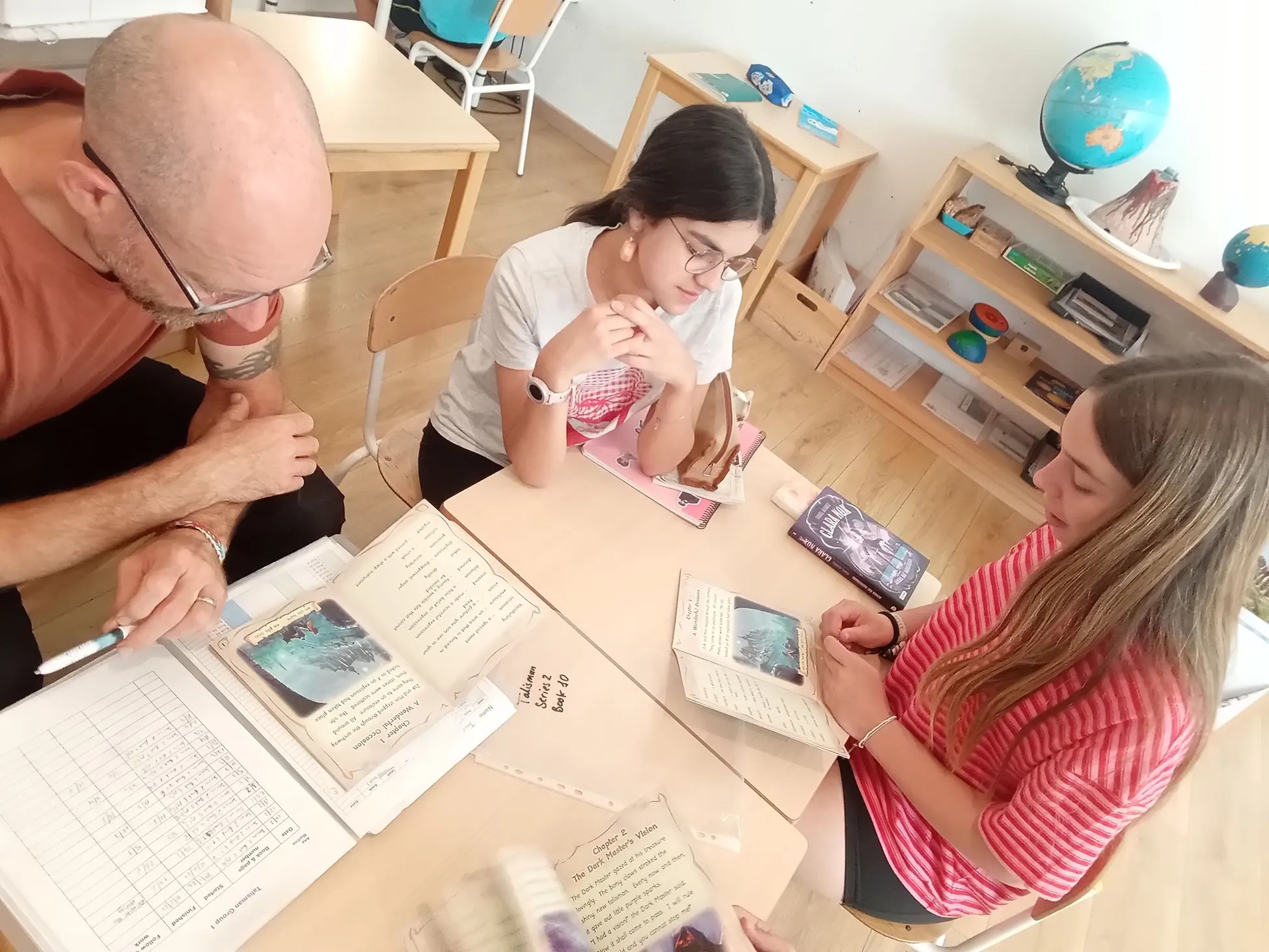
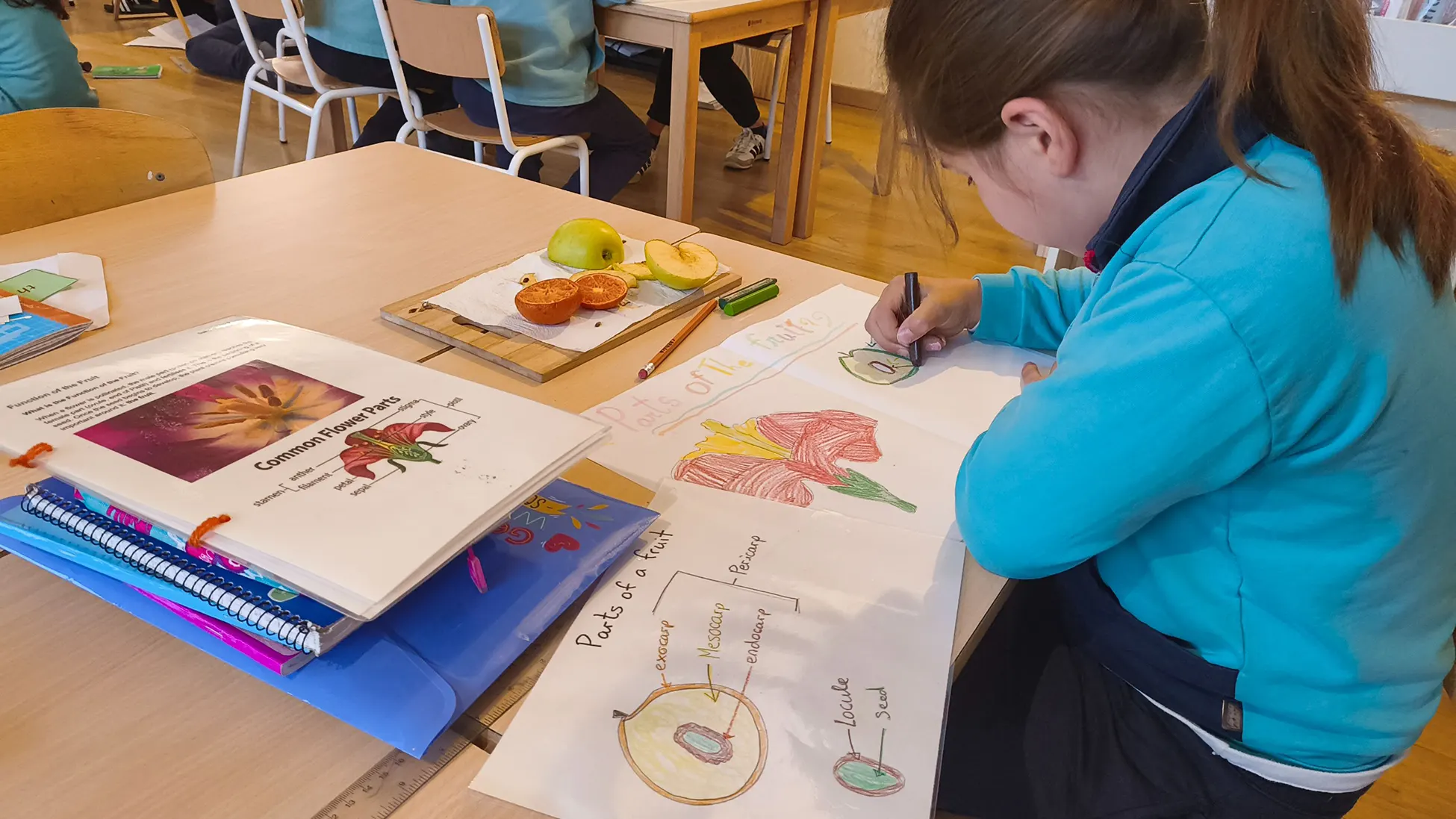
In our classrooms, adults model English by using gestures, objects, pictures, repetition, stories, songs, vocabulary activities, Montessori materials, and real-life situations. Children use English by naming things, sorting, researching, reading, writing, asking for help, preparing presentations, working together, and sharing what they learn.
Language is not learned just by memorising words. Research shows that language skills grow when they are connected to action, interaction, and meaningful experience.
We support and expect English through careful planning, modelling, observation, and assessment, rather than by setting strict rules.
A Thoughtful Bilingual Program Is Different
Some schools have a simple language policy: adults speak English, and children must as well. This might sound clear and can look impressive from the outside.
But a bilingual program needs more than just a rule about which language to use. It requires understanding how children learn, ways to observe progress, plans for children at different stages, and real respect for the feelings involved in learning a new language.
Our work on the Field Guide has been important in this regard. Writing and investigating bilingual elementary practice has pushed us to ask better questions. For example, what does real progress look like before speech appears? How do children move from listening to speaking? How does identity affect language choice? When does correction help, and when does it shut a child down? How can the Montessori environment make English meaningful instead of merely obligatory?
These questions shape what we do every day. Our goal is not just to show that English is present, but to create the right conditions for lasting acquisition.
Children Use Languages in Human Ways
Children do not pick languages randomly. They choose which language to use depending on their relationships, confidence, habits, play, identity, and what they need at the time.
A child might speak English with one teacher but use Spanish with a friend. They might understand a lesson in English but answer in Spanish. They could use English during a presentation, then switch to another language while playing. Some children speak English at school before they do at home, while others do the opposite.
Research on multilingual children shows that language dominance changes over time, depending on the situation and who they are with. Skills can also be spread across languages, with different strengths showing up in different places.
Because of this, we do not judge a child’s bilingual development only by asking, “Are they speaking English?” A better question is, “How is this child growing as a communicator in different situations and in both languages?” We value and support Spanish, as well as any other home languages children bring to school. Maintaining and developing these languages is important; a strong foundation in the home language supports identity, learning, and growth in new languages. We want children to feel proud and secure as multilingual communicators, able to express themselves fully and confidently in both English and Spanish.
The Montessori Piece Matters
In Montessori education, we focus on giving children choice and control. They are not empty containers to fill. Instead, they actively participate in their own growth.
Language is part of agency. Language learner autonomy research describes learners planning, monitoring, and evaluating their own learning. David Little stresses that a child’s first language supports thought, identity, and the development of new language.
This matches what we do in our Montessori classrooms. We guide children toward English, give them the words they need, and encourage them. We celebrate their effort and never shame children for using Spanish or another home language.
Often, the best response from an adult is not “No, in English,” but “Yes, I understand. In English, you could say…” This gives the child a way into English without ending the conversation.
How We Know Progress Is Happening
Families sometimes ask, quite reasonably, “If you do not require English all the time, how do you know children are making progress?”
Teachers watch and record progress every day. Guides notice how children use and understand English in class, such as when they follow instructions, share ideas, respond to stories, interact with classmates, or try new words. They use notes, checklists, and language assessments to track this.
We look for signs that a child understands classroom language and follows instructions. We also notice if they respond to stories, recognise vocabulary, join in songs or repeated phrases, choose English materials, read, write, use English with adults, try a word with a friend, or start using English on their own in meaningful moments.
The Common European Framework of Reference for Languages (CEFR) also takes this broader view. It describes language through different modes of communication: reception, production, interaction, and mediation. It also uses “can-do” descriptors rather than judging language only by isolated accuracy.
In short, we closely monitor English development, track progress, and support children as they move forward.
What Families Can Do at Home
At home, one of the best ways to help is to give your child fun and relaxed exposure to English.
You might read a favourite book in English, listen to songs, watch a movie your child already knows but in English, play a simple game together, or let your child teach you a word from school. Even if you cannot travel or meet English-speaking friends, there are many easy ways to bring English into your family life. For example, you can find free online stories or songs, label a few things around the house in English, help your child write a shopping list with some English words, make drawings or crafts and name them in English, or take turns describing objects in English during daily routines. Small, meaningful moments of hearing, using, and enjoying English every day can make a real difference.
Research on bilingual development shows that both the quantity and the quality of exposure matter. Children learn more words and structures in the language they hear more often, especially when the exposure includes real interaction with different speakers.
A simple rule at home is to invite your child to use English, not to test them. Instead of saying, “Say it in English,” you could ask, “Can you teach me one English word from school?”, “Should we listen to the English version?”, or “I wonder how your guide says that in English.” These small changes help keep English linked to curiosity and relationships, not just performance.
The Bottom Line
Our goal is for children to become confident and capable users of English, not just in conversation, but also in reading, writing, understanding, and studying different subjects and situations.
This is why our approach is both ambitious and thoughtful. We make English present, meaningful, understandable, social, and well supported. We avoid strict rules or pressure because confidence, understanding, identity, and readiness all matter in real learning.
By the end of elementary school, most children can understand and communicate confidently in English in a wide range of classroom situations. They can express ideas, join discussions, read books and texts, and write stories, descriptions, or reports at a level adequate for their age. While each child’s journey is different, most reach a level where they actively take part in English during lessons, projects, and daily interactions with adults and peers, without giving it much thought. They can then choose to study secondary education in English or Spanish.
The goal is not just speaking, but full participation in learning and studying in English. The path is steady, supported practice, not pressure.