Freedom in Montessori: Much more than ‘doing whatever you want’
In Montessori, discipline is not something imposed from outside with punishments or rewards, but a natural process that develops within the child, like a muscle strengthened through practice.
Internal Self-Discipline
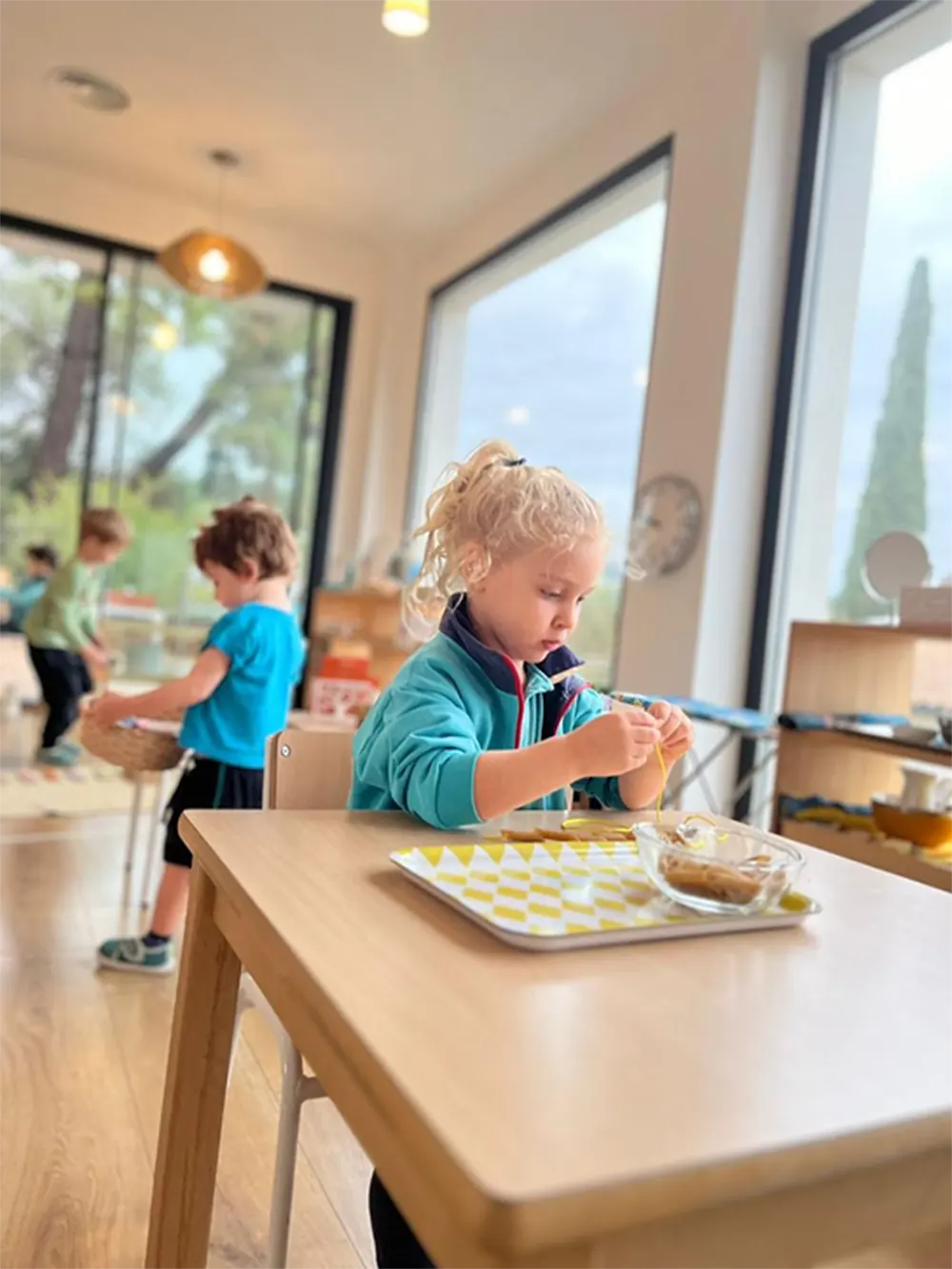
Imagine discipline as an inner guide: the child is born with a universal developmental plan, such as learning to walk; there is also a developmental plan to master oneself and exercise liberty. Instead of forcing silence or passive obedience, the adult prepares an environment with clear limits that allow the child to act freely. This is how self-discipline emerges: the child chooses to repeat activities, controls their movements, and focuses attention, gaining mastery over themselves step by step.
Freedom vs. Liberty: Choosing Well
In Montessori philosophy, freedom and liberty are distinct yet interconnected—freedom is the inner capacity for purposeful, responsible choice developed through self-discipline, while liberty is the external opportunity to act on that choice within structured boundaries. Freedom drives the development of self-control and conscious decision-making, allowing children to follow innate interests; liberty provides the absence of hindrances within a prepared environment, enabling movement and selection as long as it respects group harmony. Together, they form a powerful duo: the child pauses to evaluate options, selects a reasoned path (excluding chaos), and acts with purpose—for example, picking a material from a low shelf, using it precisely, and returning it neatly.
Acting with Purpose and Confidence
| Aspect | Freedom (Internal) | Liberty (External) |
|
Nature |
Capacity for self-control and choice | Opportunity to act without hindrance |
| Development | Gained through experience and discipline | Provided by prepared environment and limits |
| Classroom Role | Drives purposeful work and independence |
Enables movement and selection within rules |
True freedom within limits means having the confidence and skills to execute the chosen plan: dressing alone, cleaning a spill, or asking a peer for help. Limits such as “respect others’ work, care for what you use, and protect life” channel energy toward joy, social order, and fulfilling work. At Montessori Córdoba, this vision of freedom and discipline nurtures deep growth, in which the child learns to become their own master, exercising self-discipline and responsibility.